
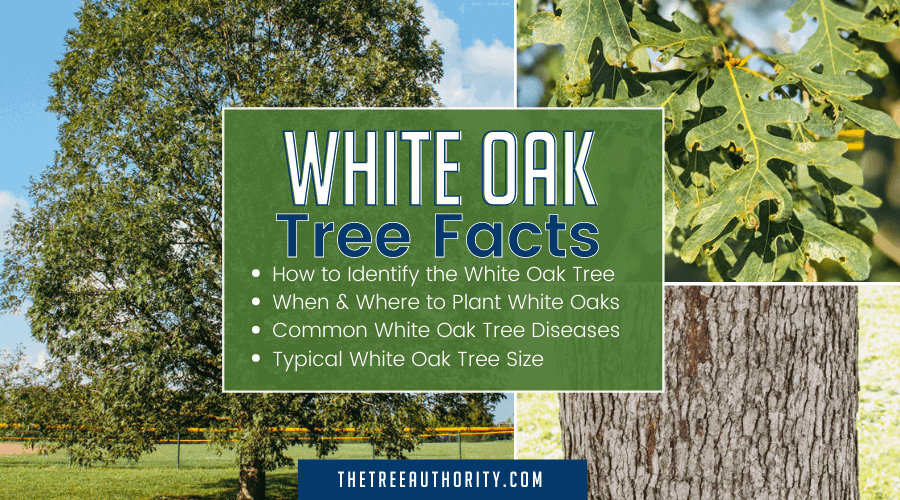
White Oak Trees are very common and widespread throughout the United States.
The White Oak Tree may live hundreds of years if they are left undisturbed and can reach heights over 100 feet!
They typically grow 60 to 80 feet tall and with limbs that can stretch wide as they do tall if they have an open area to grow.
Let’s learn all of the White Oak Tree Facts!
White Oak Tree Scientific Name
The scientific name for the White Oak Tree is Quercus Alba.
White Oak Tree Identification
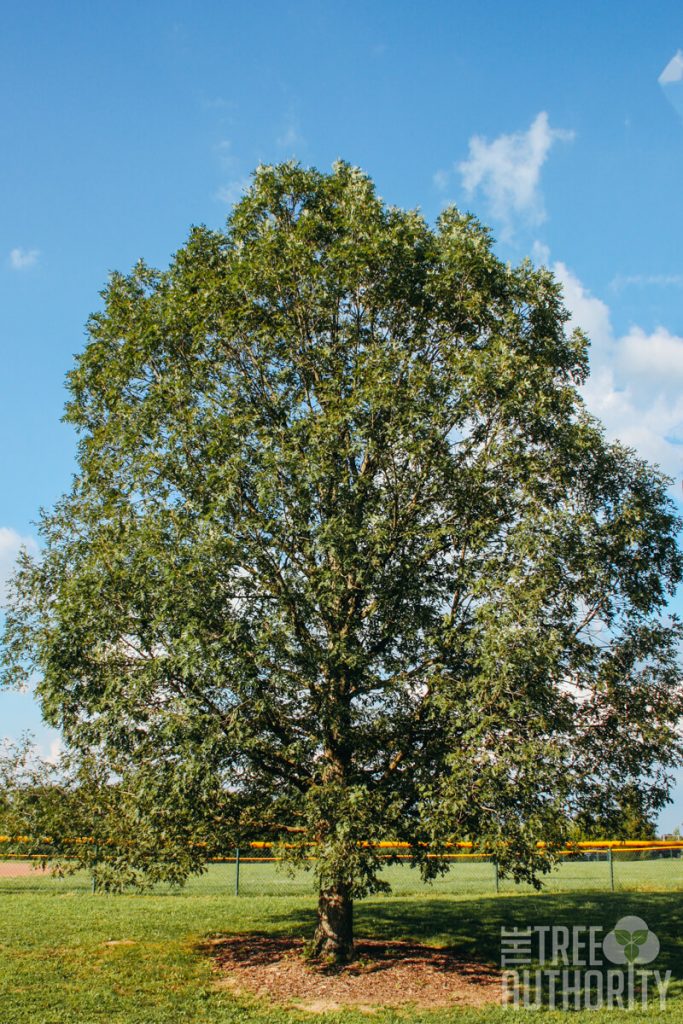
White Oak Trees can be fairly easy to differentiate from Red Oak Trees. White Oak Trees have conspicuous ash grey bark and the lobes of the leaves are rounded.
White Oak Bark
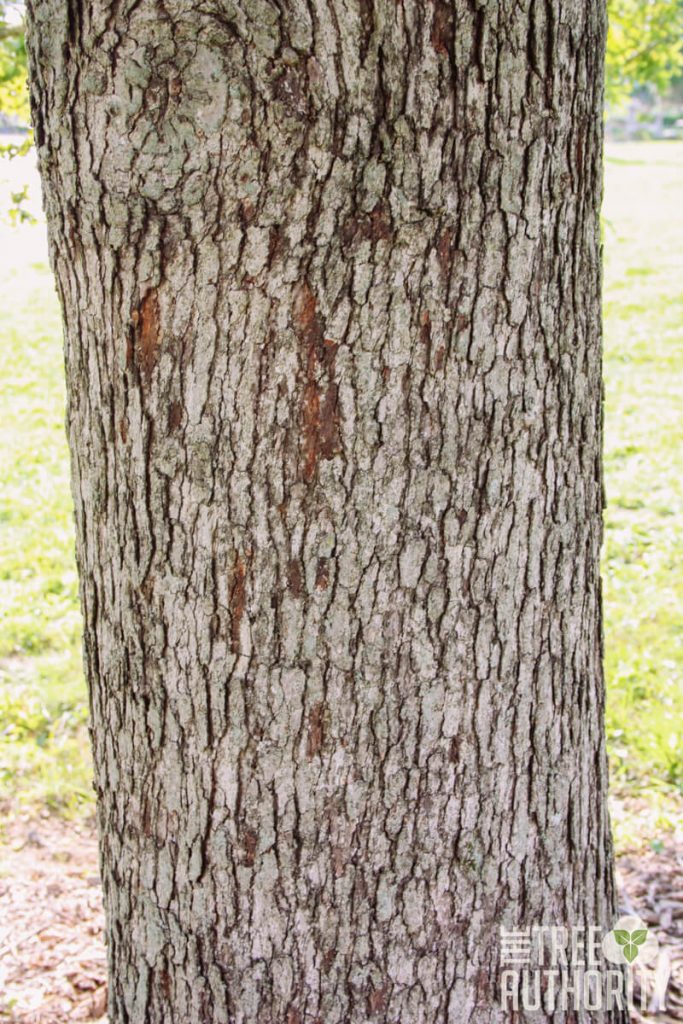
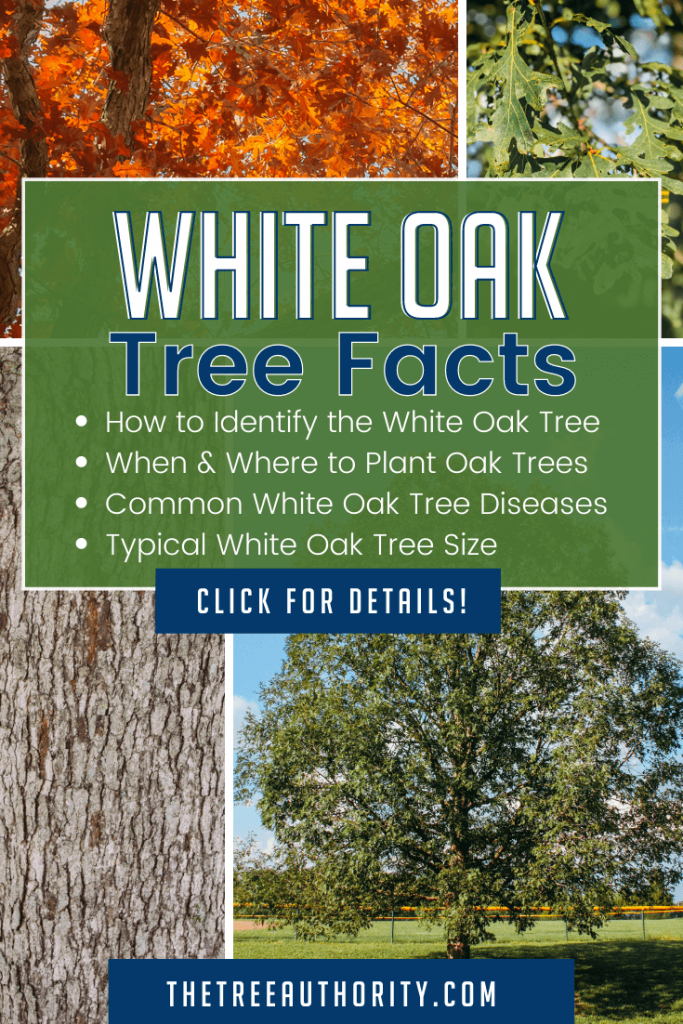
The bark of the White Oak Tree is an ashy grey color. The bark can be fissured or platy in texture; a single tree can have a wide variety of bark textures.
White Oak Tree Leaves
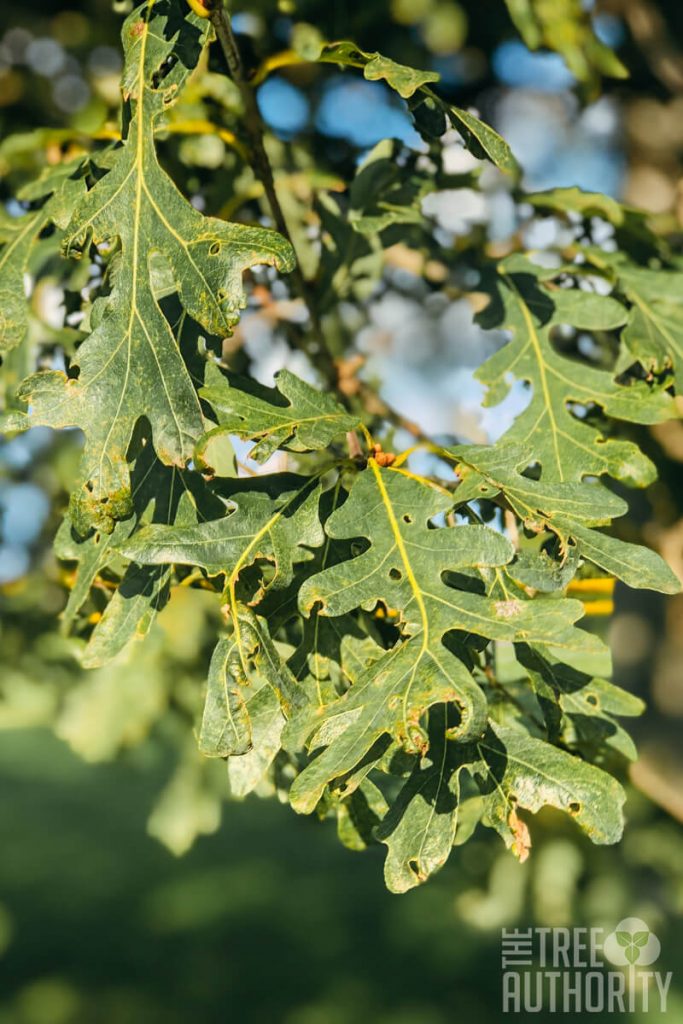
The leaves of the White Oak Tree have rounded lobes without bristle tips that are arranged in a simple alternate pattern.
They can have 5 to 10 lobes per leaf. Leaves can be 5 to 9 inches long and 2.5 to 4 inches wide; they are typically widest at the middle.
The leaves have a dull green surface color with a paler yellow color underneath during the summer months.
White Oak Fall Color
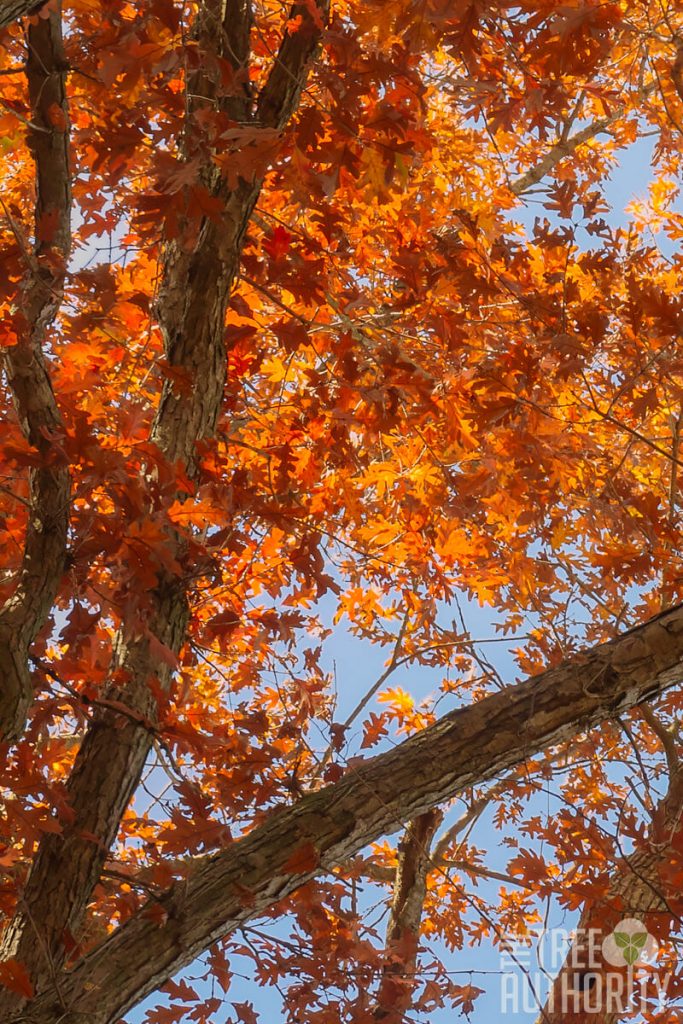
During the fall the leaves change to a variety of colors ranging from brown to deeper, duller reds.
White Oak Tree Flowers
White Oak flowers appear in mid-spring when the leaves begin to unfold. One tree produces male and female flowers that range in color.
Male flowers are typically yellow-green while female flowers are reddish-green.
White Oak Tree Buds
The buds of the White Oak Tree are egg-shaped and ⅛ to ¼ inches long. They can be light brown or possibly a little reddish-brown.
These buds are usually single but they can be paired.
White Oak Tree Acorns
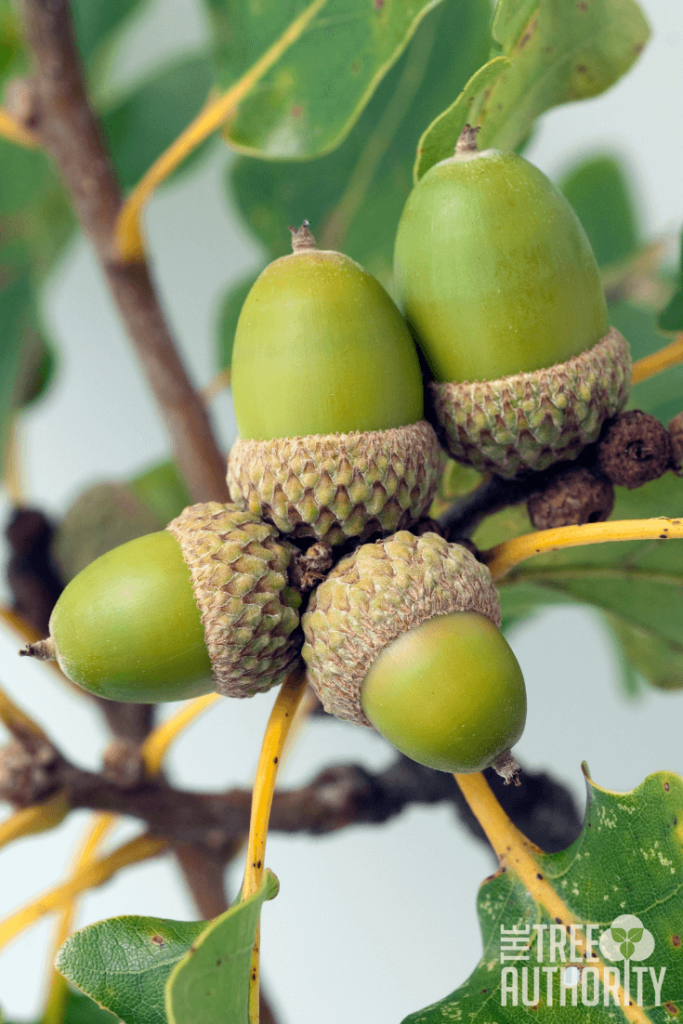
White Oak Trees produce acorns from the mature female flowers; these acorns mature over one season.
The acorns are ¾ of an inch to 1 inch long with a warty or bumpy cap that covers almost one-quarter of the acorn.
White Oak Tree acorns are an essential food source for wildlife, they produce fewer tannins which make them less bitter and more palatable to wildlife.
Wildlife such as various squirrels are an integral part of seed dispersal for the White Oak Tree.
Planting a White Oak Tree
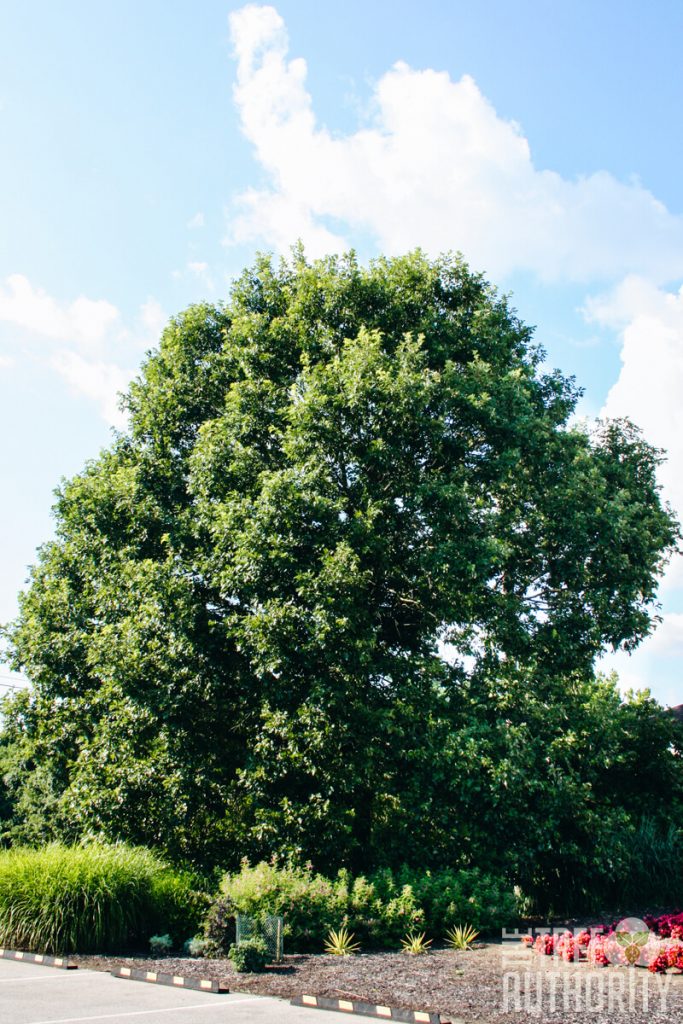
The White Oak Tree prefers a soil pH of 5.5-6.5. They prefer full sun but they can tolerate some shade, they are more tolerant of shade while they are younger.
Due to the spreading nature of the tree, it needs plenty of space to grow horizontally.
While they can adapt to a variety of soils and soil textures, they do prefer deep, moist, and well-drained sites.
It is very difficult to transplant White Oak trees due to their root system. To have the best success in transplanting these trees, it is highly recommended to transplant them when they are very young.
These trees are rarely grown commercially except young bare rootstock, where the young trees are pulled while they are bare and leafless, this typically occurs in the fall.
The roots are shaken from the soil, and then packed in moist material to be stored and shipped.
White Oak Tree Root System
White Oak Trees have a taproot system, this means that the main root of the tree grows deep down into the soil with smaller root systems growing out laterally.
The initial root grows straight down in search of a dependable water source, once the root is well established, greater growth of the tree can be sustained.
White Oak Tree Growth
White Oak Trees can grow 12 to 24 inches in one year meaning that they have moderate growth.
These trees can grow 50 to 100 feet tall, they are spreading trees that have horizontal limbs that can stretch as wide as the tree is tall, around 50 to 80 feet.
White Oak Tree Problems and Diseases
The White Oak Tree is a relatively hardy tree, there are a few pests and diseases that can affect it, but not many are very significant.
Some of the more prominent pests or diseases impacting the White Oak Tree are:
- Oak wilt: a fungal disease that can cause leaf discoloration, wilt, defoliation, and can cause rapid mortality.
- Armillaria root rot: also known as shoestring root rot spreads as mushrooms around the base of the tree that produce spores that are carried in gusts of wind.The fungus attacks the living tissue of the tree which impacts the ability of the tree to transport resources to the upper portion of the tree. This disease gets its name from the “shoestring” like rhizomorphs that develop and grow on dead trees to reach new trees.
- Anthracnose: a common fungal disease that can occur in shade trees. This disease can cause leaf curling, leaf spots, and early leaf drop.
White Oak Tree Facts Conclusion
White Oak Trees can grow to impressive sizes and spread almost as wide as they are tall. They are fairly hardy trees that can grow fairly healthily when left alone and given plenty of space and sunshine.
They are very long-lived, many specimens living well over 100 years old with few problems.
These are impressive trees that can be hard to transplant or harvest commercially but are an important food source for many species of wildlife.
You may also be interested in:
Be sure to pin this post for later:

We are in middle Georgia and been told not to worry about the white oak tree that’s maybe 35 feet from the house because its roots go so very deep. It is huge—over 100 feet tall with a canopy about 70 feet wide. The trunk diameter is about 3 feet. There is a creek located about 35 feet from it. How deep are the roots and should we indeed be worried about it? Dead branches on it are trimmed routinely.
I planted a white oak 2 years ago in the wrong spot. She is about 7’ tall with a caliper of about 2”.
It’s not the trees fault I planted it too close to my neighbors wooden fence nor for not allowing for its massive growth.
I live in Aiken, South Carolina and planned to move her to my front yard where she can grow to her hearts content.
I need guidance in digging, moving and planting her so I don’t cause any more stress to my poor tree. Can you help?
Appreciate your article on the white oak. My wife and I have a large old one on our property. Not sure of age but looks to be over 100 years old. The roots on north side of the tree show signs of root rot to the point of being spongy at and near the tree. You can crush them by standing on them. Have read that hydrogen peroxide can be used to kill fungus that causes root rot. Would that be an affective method to slow down the problem? We live in Mississippi.